About Us
- Home
- About Us
About Karnataka
The history of the labour movement in Karnataka is an epic narrative of a fragmented region’s journey toward a unified class consciousness, a journey in which the All India Trade Union Congress (AITUC) served as the primary architect. Long before the state’s unification in 1956, the struggle was divided across five distinct administrative territories: the Mysore State, Bombay Province, Madras Province, Hyderabad-Karnataka, and the State of Kodagu. Because of this geographical and political division, early labour activities were often localized and influenced by the leadership of neighboring political hubs like Bombay and Hyderabad. However, the establishment of AITUC in 1920 provided a platform where Congress and Communist leaders initially collaborated to lay the foundations of the movement.
The Industrial Genesis in Mysore and the 1940s Upsurge
-
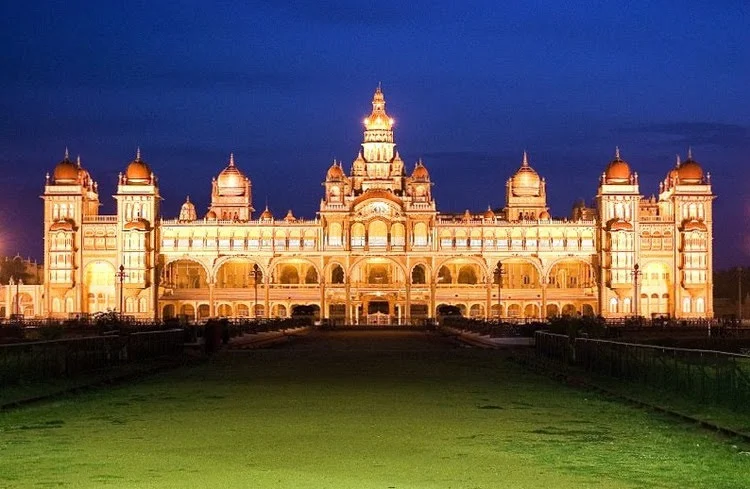
The roots of organized labour in Karnataka are found in the Mysore region, where industrialization accelerated after 1850 under the patronage of the Mysore Maharajas and the British. Massive textile enterprises such as Binny Mills, Raja Mills, and Minerva Mills became the initial epicenters of worker resistance. While the early leadership of AITUC in Mysore included figures like Bhashyam, a prominent Congress leader who provided political prestige as a president, the strenuous organizational work on the shop floors was carried out by pioneers such as N.D. Shankar and Ram Rao.
-
By the 1940s, the movement underwent a significant transformation, taking a more "organized shape" as leadership transitioned firmly into the hands of Communist activists. A defining moment in this era was the 1942 Binny Mills strike. The conflict arose from the management's refusal to recognize the workers' union, leading to a massive standoff. Veteran activist H.S. Doreswamy later recorded that the intervention of N.D. Shankar and the striking workers provided a critical boost to the broader freedom movement in Bangalore during 1942.
-
Simultaneously, the movement in Mysore was intertwining industrial grievances with political aspirations. Somasundar Sharma, a freedom fighter and railway worker leader, organized nearly 10,000 railway employees during the 1940s. In a historic show of strength, these workers marched with red flags to demand a "Responsible Government" at a time when the Mysore Maharaja was hesitant to join the Indian Union. When N.D. Shankar was later exiled from Bangalore in 1944, he carried this revolutionary spirit to Bhadravathi, where he successfully organized the workers in the burgeoning steel industry.
Regional Fortresses: From Gold Mines to Cotton Mills
AITUC’s influence was not limited to the capital; it meticulously expanded into every industrial pocket of the fragmented state:
-
Kolar Gold Fields (KGF): KGF became one of the most powerful bastions of the labour movement. Early leadership was provided by Vasan, who was elected as an MLA in the first general elections of 1952. He was joined by M.C. Narasimhan, a brilliant mind who famously abandoned his engineering studies to organize the miners. Narasimhan’s dedication led to his election as an MLA in 1957, cementing the political power of the gold mine workers.
-
Hyderabad-Karnataka (Gulbarga, Shahbad, Raichur): In Gulbarga, the MSK Mill (textile) was the primary site of struggle. In the Shahbad and Wadi regions, AITUC organized massive numbers of workers in the cement industry (ACC). Leadership in this region—often operating underground—included Magdoom Mohiuddin, Srinivas Gudi, and Adiveppa. In Raichur, the Hatti Gold Mines became a significant stronghold under the guidance of Com. Pai and later Arvind Mallebennur, who built a powerful and resilient union. The success of these organizational efforts was reflected in the electoral victories of CPI leaders like Sharanappa Bairi, K.B. Sharanappa, and Namosi.
-
Bombay-Karnataka (Belgaum & Bijapur): In Belgaum, the Gokak Textile Mill and the Indian Aluminium Company (Indal) were hubs of activity led by Krishna Menase, Shantaram Nayak, and B.N. Dharwadkar. In Bijapur, the movement was shaped by the underground presence of Gangadhar Adhikari and the leadership of Bhim Singh Master and L.B. Layadagundi, a freedom fighter who organized municipal workers and small textile mills during the 1950s.
-
Madras Province (Mangalore & Bellary): In Mangalore, Simpson Soans, Shantaram Pai, and Com. Kakkilaya led the struggle for beedi, tile, and cashew workers. Com.Kakkilaya was elected as the Rajya Sabha MP and MLA from Dakshina Kannada District. In Bellary’s Donimalai (Sandur) region, Arvind Mallebennur arrived in the 1970s to organize mining and loading workers, a movement that eventually led to the election of Bhupathi as an CPI MLA in 1985.
-
Central Karnataka (Davangere & Hubli): Davangere, the "Manchester of Karnataka," witnessed intense mill struggles led by Narasimhan, and later Pampapathy. Addoor Shivashankar Rao was another notable figure who faced violent physical attacks while organizing workers in the 1960s. The struggle here was marked by high sacrifice; Suresh and Shekarappa were martyred, while Pampapathy survived a deadly attack to serve as a three-time MLA. In Hubli, A.J. Mudhol organized the Mahadeva Textile Mills and was a key figure in the state unification movement. Com.Pampathy was elected as MLA from CPI for three successive terms
Era of Public Sector struggles
-
From the 1950s onwards, Com. M.S. Krishnan (MSK) emerged as a legendary figure in the movement. An engineer by training, MSK’s technical expertise and understanding of the economy allowed him to command respect from both management and floor-level workers. He led unions in major central public sector units (PSUs) such as HAL, BEL, and HMT. At HMT, he was responsible for a landmark treaty on Workers' Participation in Management, a progressive step supported by Jawaharlal Nehru.
-
MSK was also a savior of dying industries. He facilitated the merger of the ailing state industry REMCO with BHEL, ensuring the continued employment and growth of thousands of workers. He was similarly responsible for transforming the decaying private company MEI into a state public sector unit. However, he remained deeply saddened by the eventual closure of other "gems" like NGEF due to administrative obstacles.
-
The defining moment of MSK’s leadership was the Historic Strike of 1980-81, which saw 125,000 employees from eight major units in Bangalore and Hyderabad (including HAL, ITI, and BEML) stop work for 76 days. This united struggle, led by the Joint Action Front (JAF), faced brutal government suppression. During a Bangalore Bandh in January 1981, police shot dead two HAL workers and a doctor. Despite the deployment of several paramilitary forces like the CRPF and BSF, MSK correctly predicted that the workers' fighting spirit could not be broken; not a single "strike-breaker" entered the factory gates.
-
A remarkable outcome of this period was the Worker-Peasant Alliance. In February 1981, when farmers from Naragund and Navalgund marched 350km to Bangalore, the striking PSU workers greeted them with abundance, providing food and supplies in a magnificent display of class solidarity. MSK also projected the struggles of Karnataka's workers onto the world stage through his high-level involvement in the World Federation of Trade Unions (WFTU).
Modern Expansion and Legacy
AITUC’s legacy continued to evolve into the transport and unorganized sectors. In the 1970s, MSK and G.V.K. Gopi spearheaded the organization of KSRTC employees, a task later carried forward by leaders like Ananth Subba Rao. In the early 1980s, the movement pioneered the organization of “Scheme Workers” (Anganwadi workers), led by B.K. Sundaresh, Radha Sundaresh, and H.K. Ramachandrappa & N Shivanna. In the plantations of Chikkamagaluru, the path paved by Monnayya was continued by leaders like Bashu and B.K. Sundaresh. From its fragmented beginnings in colonial textile mills to the sophisticated public sector alliances of the late 20th century, the labour movement in Karnataka, guided by AITUC and leaders has been a relentless pursuit of a social order.